Geography
Notable Rivers
- The Winter Water
- Obisidian Water
- Obsidian Water Upflow
- Obsidian Water Downflow
- Obsidian Water Eastflow
Overview
The Greater Xing’er Empire, more commonly known as Singerland, is a cluster of nations to the Northwest of Kamolin.
To do
- Set Category
- Set Tags
- Set Parent
Geography
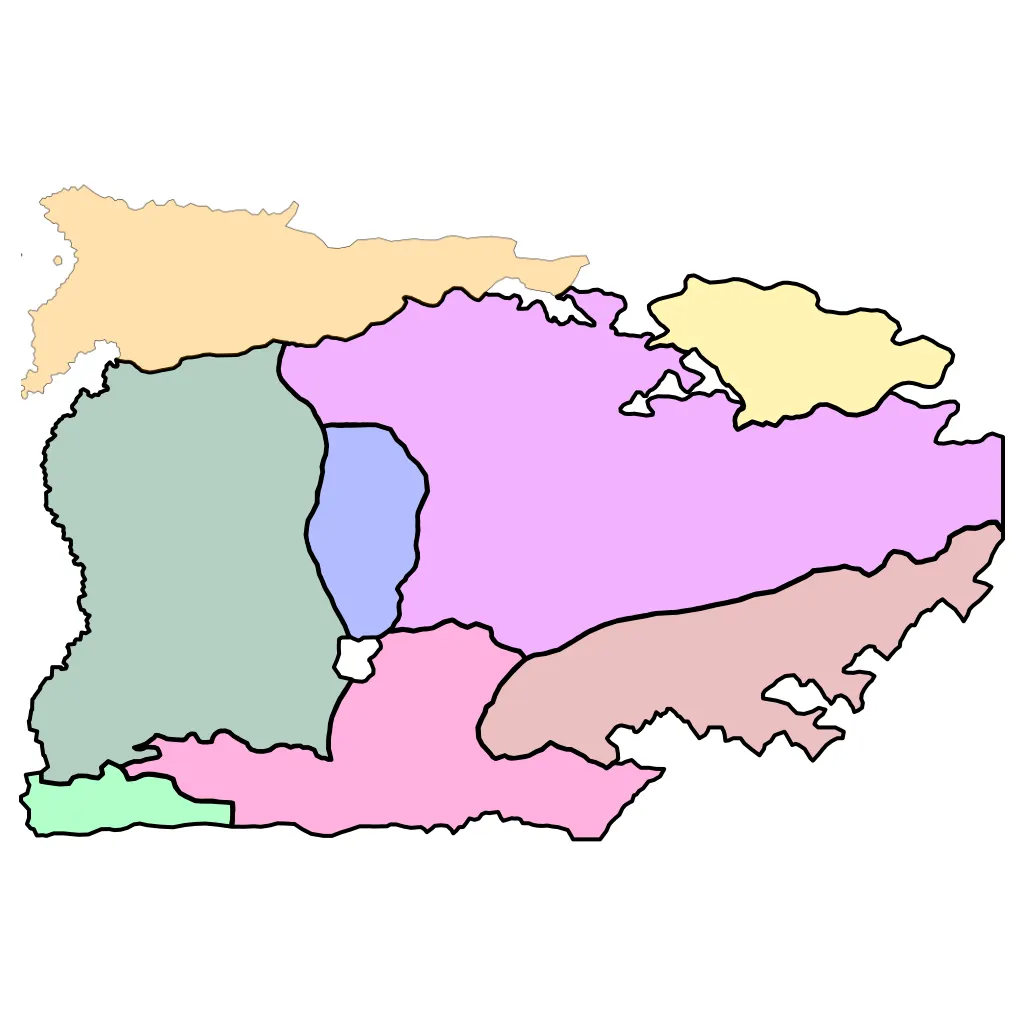
The Singer territories are a distinct region in the Northwest of Kamolin. Sitting on the western side of the convergence of the Beidamir and Kevlachian Mountains, Xing’er is naturally separate from the other major civilizations of Kamolin and has developed its own unique culture and language.
Regions & Principalities
As of HEM, the greater empire Xing’er empire is divided into 8 (not counting the Hemellein Concession) cultural regions. As Xing’er is undergoing a long standing civil war to decide the succession of emperor Yong’le, the empire has split into 69~72 so called principalities, also not all principalities push a claimant for succession of the Xing’er emperor.
Oldland
The ancient heartland of Xing’er and political center.
Oldland is mostly neutral in the Xing’er Succession War
- City of the Stars (The Seed)
- Extension
- Central
- Banner of the Stars
- Forest
- Calm Waves
- Smokey Coast
- Winter Waters
- New Freedom
- Motherland
- Banner of the Stars
- Rainfall
Western Plains
The first region to join the Greater Xing’er Empire.
Origin of Xing’er Horsemanship culture.
Traditionally seen as the first child of Xing’er.
- The Dirt Water
- The White Coast
- Shell Island
- High Coast
- Great Flat
- Clementine Valley
- Green Waves
- Eversummer
- Wheat Valley
- Cold Pool
The Inner Island
Secluded mountain valley in the center of Xing’er
- Whitehorn
- East Field
- High Field
- Twin Rivers
- New Midlands
The Great Lakes
Economic powerhouse of Xing’er. Industrial and mercantile region. With mixed Xing’er and Meklentine roots.
- Undershadow
- Field of Plenty
- Westlake
- Lower Three Dragons Valley
- Eastlake
- Southern District
The Fragrant Valley
Population center of Xing’er.
Driving force in the Eastern Phase of the Xing’er War of Succession.
- Two Pines
- Wolf’s Journey
- Meadows
- Morning Springs
- Forklands
- Spicetown
- Heaven and Earth
- Long March
- Flight of the Fishes
- Cauldron
- Three Fields
- Birdsong
The Eastern Highlands
Agricultural, mining, and industrial heartland of Xing’er.
Large swathes of scarcely populated land, cultivated by a rough and unyielding people.
- Colorful Basin
- Princen Pool
- Green View Valley
- Bear Glades
- Poor Man’s Shoes
- Lightning Road
- Burning Morning
- Maiden Cross
- Riverdance
- The Three Dragons
- Strong Grain
- Flat Rock
- Overwood
- Aerie in the Mist
- Inner Lemon Garden
- Outer Lemon Garden
The Roof of the World
Spiritual and educational center of Xing’er.
- Steamy Trunks
- Crystalline
- Blue River
- Snow Rest
- Paradeise
- Standing Water
The Vanguard
The last addition to the Greater Xing’er empire, conquered from the Raiteben.
- Vanguard
- Spectral Island
Unaligned
Regions that are nominally part of Xing’er,
but don’t contribute to the Xing’er empire.
- Central Roughlands
- Wolf Valley (Eastern Sanctuary)
- Hemellein Concession
Major Cities
Xing’er is the most populous region of Kamolin and has as many major cities as the Stonemason Successor States have combined.
Oldland
Neutral in succession
- The Seed
Active in succession
- Coast of the Little Fishes
- Sun Joy
- Smoky Bay
- Piety
- Rich Soil
Inactive in succession
- Gull Circle
- North Guesthouse
- Big Fish
- Neverdark
- Above the Summer
Western Plains
Active in succession
- Treaty of the North
- Dry River
- Old Willow
- Prosperous Land
- Three Silences
- Planes
Inactive in succession
- Land of the Orchids
- Halfway
- Over Ocean
- Old Longings
- Icetown
The Inner Island
Active in succession
- White City
- Wheat Island
- Heaven’s Mercy
- Southern Connection
Neutral in succession
- Hemellein Concession
The Great Lakes
Active in succession
- South Lake
- Field of Plenty
- Sunfall
- Flower of Peace
- Overlake
Inactive in succession
- Summer Palace
- Farewells
The Eastern Highlands
Active in succession
- Dream of Clouds
- Harvest Moon
- Mortal Harmoney
- Sinking Light
Inactive in succession
- Birds Nest
- Maiden Crossing
The Fragrant Valley
Active in succession
- Yellow Rock
- Stone Bridge
- Spicetown
- Hundred Waters
- Persimmon Garden
Inactive in succession
- Petal Banks
- River Castle
- White Waters
- Twin Cities
Vanguard
Active in succession
- Distant Shore
- Spectral Harbor
The Roof of the World
Active in succession
- Twin Peaks
- Autumn Springs
Terrain & Resources
short description & explanation
- List Item
Climate
The Singerland is divided by steep mountains and deep rivers, spanning over a large region, the Singerland has extremly divers climate zones.
- Oldland and the Roof of World have subarctic climate, with harsh winters and mild summers.
- The Western Plain are the most extreme, having brutal winters, with strong winds coming from the ocean, and sweltering summers.
- The Inner Island and Central Roughlands are mostly temperate rainfroests, with mild year round temperatures (mainly due to the warm waters of the Obisidian Water) and heavy annual percipitation.
- Great Lakes and the Fragrant Valley have a temperate climate, moderately cold winters and moderately hot summers, with heavy rainfall and flash floods in the Burning Season.
- The Eastern Highlands, a region of high elevation, similar to the Western Plains have cold winters, however winds are more moderate, and summers are mild.
- The Vanguard is sub tropical, and experiences distinct seasons, summers are hot, winters are mild and frost is rare.
Demographics
short description & explanation
Population
short description & explanation
- List Item
Ethnicities
short description & explanation
- Mushan Xing’er (Proto Xing’er)
- Originating from the Mother, two distinct tribes, forming the core of what was to become the greater Xing’er empire
- Jing Xing’er
- The dominant ethnic group in Xing’er, led by Yong’le to unify Xing’er. Strong intermingling in all noble and many wealthy landowner and merchant classes in Xing’er
- Western Xing’er
- Canshan Xing’er (Schinders)
- Still distinct language and culture in the Vanguard, Southern parts of the Western Plains, and Western parts of the great lakes
- Zhonglu Xing’er (Midlanders)
- Formerly a culture that sprung up along the Obsidian Waters
- Largely assimilated by the Mushan
- Disorganized Remnants still found in the Central Roughlands
- Milian Xing’er (Beidamirians)
- Ethnically close to Tenbrake, though culturally fully distinct.
- Strong intermingling with the Mushan, but with distinct regional culture and customs.
- Goya Xing’er (Fragrant Valley, Valley Folk)
- Large intermingling with the Mushan, but still distinct
- The largest ethnic “minority” in Xing’er
- Ethnically they are Kevlachians (like the Crowlanese), but originate from the Wise Folk
- A subgroup of the Goya, around White Waters, River, Castle, Twin Cities, and Spice Town originate from Giligan Peaks and are thus closer to the Maeklentine.
- Huzu Xing’er (Lake Folk)
- Originally settled by tribe from the Peacekeepers, the Huzu and there culture were largely assimilated by neighboring tribes. However, the term Huzu transferred to the new potpurri culture of Mushan, Canshan, Zhonglu, Goya, and Maeklentine.
- Eastlanders
- While signs of native Eastlander tribes exist, no dominant culture was ever able to form. Facing constant incursions from neighboring Xing’er nations, the East never unified under either nation, switch hands often and constantly. Which also reflects in their people.
- Concessionists
- A new group of Xing’er forming in the Hemellein Concession. A mix of Mushan and Canshan Xing’er that adopted Hemellein language, customs, and mannerisms.
Languages
short description & explanation
- List Item
Urban
short description & explanation
- List Item
Rural
short description & explanation
- List Item
Culture
short description & explanation
People
short description & explanation
- List Item
Customs
short description & explanation
- List Item
Food
short description & explanation
- List Item
Language
short description & explanation
- List Item
Values
short description & explanation
- List Item
Religion
short description & explanation
- List Item
Daily Life
short description & explanation
- General
- Fashion
- Manners
- Diet
- Education
The Arts
short description & explanation
- List Item
Entertainment
short description & explanation
- List Item
Architecture
short description & explanation
- List Item
Economy
short description & explanation
Businesses
short description & explanation
- List Item
Industries
short description & explanation
- List Item
Trade
short description & explanation
- List Item
Transportation
short description & explanation
- List Item
Communication
short description & explanation
- List Item
Technology
short description & explanation
- List Item
Medicine
short description & explanation
- General
- Fashion
- Manners
- Diet
- Education
Magic
short description & explanation
Preferences
short description & explanation
- List Item
Schools
short description & explanation
- List Item
History
XIng’er has the longest recorded history of any culture, mainly due to its quick consolidation and stable politics during the reign of the first Xing’er Emperor.
Timeline of Xing’er
- -166/ EEL-166 – Emergence of the Children of the Night
- Consolidation of Xing’er proper
- Time of warring states
- Birth of Emperor Yong’le
- Conquest of the Xing’er Subcontinent
- Reunion of the Xing’er tribes
- Conquest of Northern Schinder
- Push to the Lightning Road
- Conquest of the Great Lakes
- Roof of the World joins voluntarily.
- After a century of war The Fragran Valley Nation collapses and is annexed into Singer
- The Vanguard and the Inner Island join voluntarily
- The long inner peace period begins
- 3921/HESM 603 The Emperors Sleep
- 4043/LESM 111 War of Xing’er Successionst Item
The War of Xing’er Succession
As of HEM, the war of Xing’er Succession is the defining and ongoing event in Xing’er affairs and the main reason why Xing’er has been absent from the global stage even during the events of the fall of Iyodine.
My time is at an end. The children shall tear open the road. Let them decide for themselves what is to come.
– Emperor Yong’le, LESM 111
As of HESM, Emperor Yong’le at that time already assumed to be around his 2000th cycle, started experiencing longer and longer bouts of tiredness and sleep, lasting multiple cycles to decades at a time. An extreme case, of the immortal sickness that is often found among those with long life spans.
With the Emperors sleep worsening at the end of HESM (3921/HESM 603), Xing’er is left paralyzed in international affairs, as the stewards of Xing’er had been left with the Paradigm of Harmony, e.g. they must preserve the harmony of Xing’er above all else. Basically barring them from implementing any major reforms or changes. As the central force of Xing’er stopped issuing decrees, but prevented any upheaval feverishly, the regions of Xing’er were left to their own devices for as long as they didn’t start any major wars. A period of regionalism begins as the 8 regions of Xing’er begin to focus on their own affairs instead.
In LESM 111, the emperor awoke briefly and enjoyed a spring morning walk around the gardens. An attendant, who happened to witness the surprising event had the presence of mind to ask Yong’le of “What is to happen to the empire in his absence?”. To which Yong’le laughed “My time is at an end. The children shall tear open the road. Let them bicker among themselves for what is to come.”.
These words were enough to break the deadlock among the stewards of Xing’er, who closely decided that this was to be interpreted as the end of the Paradigm of Harmony.
The main issue that arose was the definition of what constitutes “the children”. Yong’le is a godlike figure in Xing’er affairs and is an ascendant in all but name. He has fathered hundreds of children over the millennia. Of which a few are still alive in HEM. However, large parts of Xing’er nobility can claim somewhat of a blood kinship to the emperor. As a politican, Yong’le is revered as the father of the nation, thus all Xing’er are his children in spirit. In religious teaching, Yong’le is seen as the avatar of the Singerlands, another strong contenteder that every Xing’er should be eligible for succession. Mushan extremists will claim, that he would all Xing’er, but all Xing’er would only include the Jing Mushan and the Western Mushan. Finally, a large faction also believes that the emperors sleep proclamation is either made up or never lifted the Paradigm of Harmony, thus infighting would mean open rebellion towards the emperor and would need to be crushed to restore Harmony.
Factions
- Royalist – only the trueborn children of emperor and their children can stake a claim for the empire.
- Noblessists – anyone with a blood connection to the emperor can stake a claim for the empire.
- Superviventionists – anyone can stake a claim to become emperor. The strongest child is the most worthy successor.
- Republicans – anyone can rule, but nobody should be emperor.
- Separations – Nobody can or should rule in the emperors stead. The Nations should run themselves.
- Religious Fanatics – Replacing the emperor is blasphemy. The emperor has decreed a fight among the children. The children shall fight to decide a supreme steward to handle worldly affairs in the emperors stead.
- True Neutral Factions – Are not eligible for succession in their own interpretation or simple prefer to wait out the result of the succession war.
- Righteous Neutral Factions – The Paradigm of Harmony was never lifted. The Emperor is in his position for eternity. Any principality taking up arms against each other is in open rebellion to the emperor and must therefore be subdued and its leaders be put to justice.
Politics
short description & explanation
Government
short description & explanation
- List Item
Politics
short description & explanation
- List Item
Legal System
short description & explanation
- List Item
Relations
short description & explanation
- List Item
Military
short description & explanation
Strength
short description & explanation
- List Item
Weapons
short description & explanation
- List Item
Record
short description & explanation
- List Item
- Capital
- The Seed – Dzirr – 籽兒
- Language
- Highsinger, Goya, Stonemason Standard
- Regional languages
- Schinderish, Milian Speak
- Demonym
- Singer
- Government
- Empire (formally) – W/o central rule
- Emperor
- Yong’le (Formally) Succession in progress
- Princelings
- Area
- Kamolin 1 /32
- Population
- Massive (1) ~400m
- Economy
- Prosperous
- Development
- Average
- Currency
- Singer Dan